A chateau, a railway man, and a hall
Three quite different buildings have stood on this corner of the Old Northside. Only one of them is still here, and it is the one you can rent.
McGowan Hall sits in the Old Northside, a neighborhood added to the National Register of Historic Places as a Historic District in March 1978. In the last quarter of the nineteenth century this was where wealthy Indianapolis built. President Benjamin Harrison lived a few streets away. So did the novelist Meredith Nicholson.
What follows is the hall's own account of itself, drawn from the building's records and the council archive. Where a claim can be checked against an outside source we have checked it.
-
1874
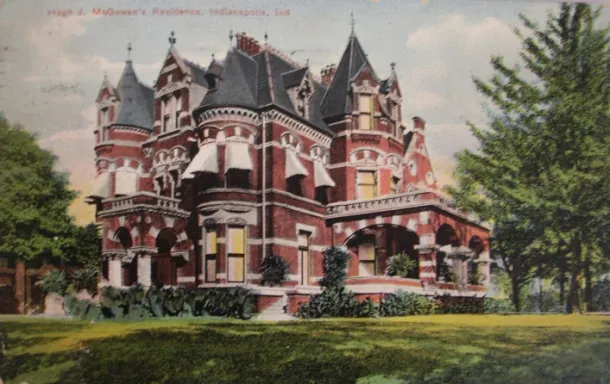
A Romanesque chateau is completed on the site for Hervey Bates Jr., a wholesale grocer and banker. The architect is William Le Baron Jenney, who worked on the rebuilding of Chicago after the Great Fire of 1871 and is often credited with the first metal frame skyscraper.
-
1880s
Under a later owner, Dr. Horace Allen, the house hosts a party for Levi P. Morton of New York, who would go on to be Benjamin Harrison's vice president.
-
1903
Hugh J. McGowan buys the chateau. Born in 1857 to Irish immigrant parents on a Missouri farm, he had been a mule tender for a Kansas City street railway and later a policeman there before coming to Indiana. By the time he arrived on Delaware Street he had founded the Indianapolis Street Railway Company in 1899 and the Indianapolis Traction and Terminal Company in 1902, and was consolidating the state's small interurban lines into a single network. His Traction Terminal, opened downtown in 1904, was the interchange the whole interurban system ran through.
-
1903 to 1911
The McGowans live in the house and put on amateur theatricals in the third floor ballroom. Among those said to have performed there is the Indianapolis novelist Booth Tarkington. It is a nice detail to hold on to: this address was staging plays for its neighbors a century before the hall started doing it again.
-
1911
Hugh J. McGowan dies in December, aged fifty four.
-
1919
The family sells the property to the Knights of Columbus, of which McGowan had been a member. Mater Dei Council 437 takes the mansion as its clubhouse. Membership is already over a thousand.
-
1922
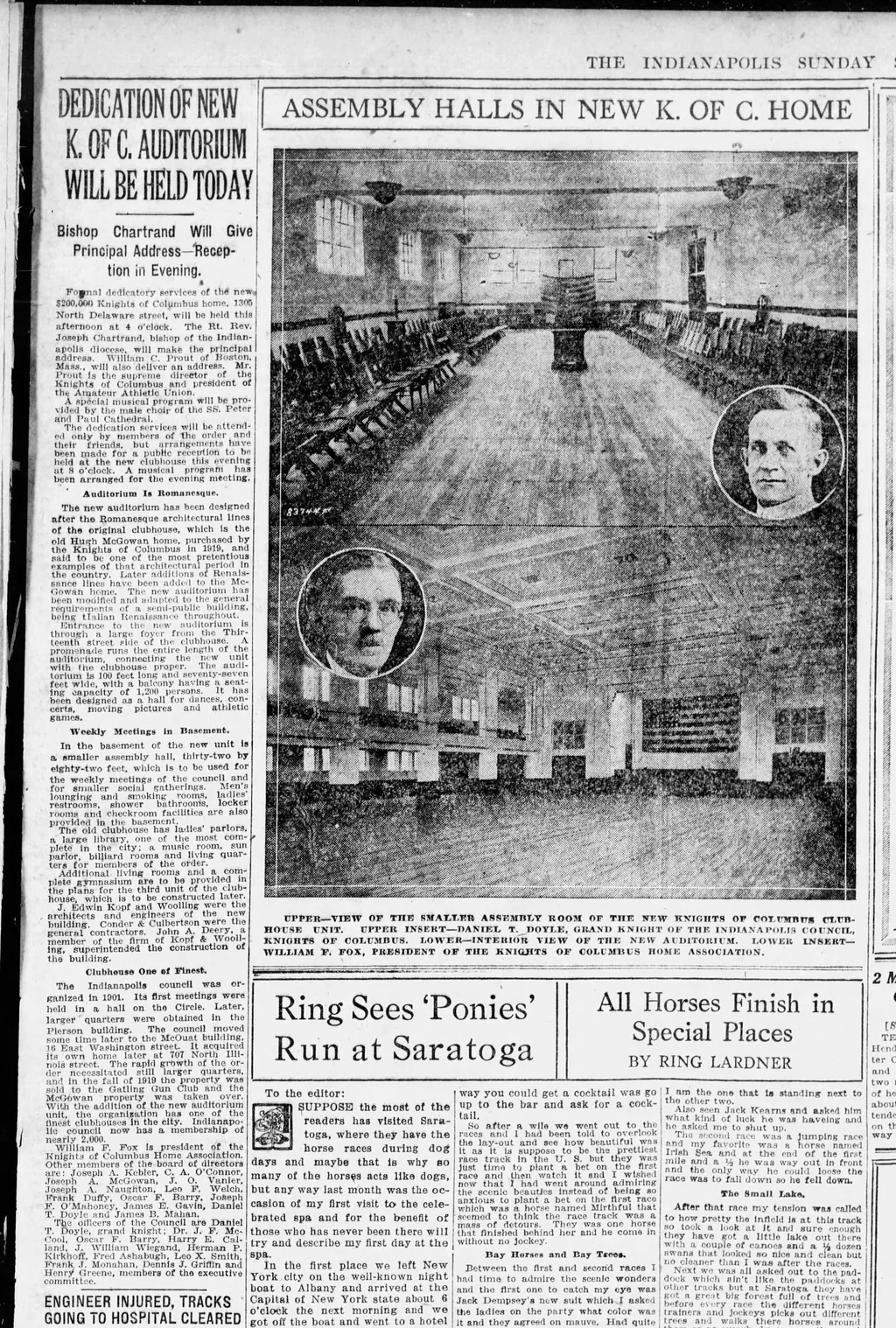
The council builds an addition behind the house and calls it McGowan Hall. Hugh's cousin Joseph McGowan, treasurer of Hugh's interests in the Traction and Terminal Company, helps finance and see through the construction. The new building holds an auditorium seating a thousand, plus locker rooms, cloak rooms, lounges and cigar parlors. Council membership reaches roughly two thousand.
-
1923
The hall is dedicated in September, with Indianapolis Archbishop Joseph Chartrand and the Archdiocese Cathedral Choir. The Indianapolis Sunday carries a full page on the new assembly halls.
-
1942
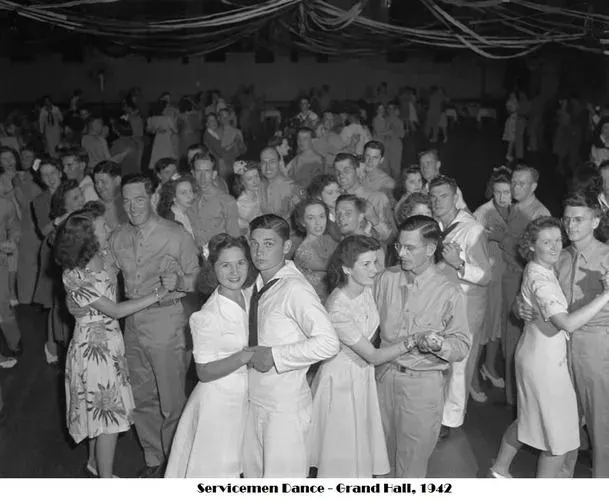
A servicemen's dance fills the Grand Hall. The photograph survives, and the floor in it is the floor you would dance on today.
-
1963
The original McGowan home is lost. The 1922 hall behind it remains, and has kept working ever since.
-
Now
Weddings, quinceañeras, galas, concerts, theatre, swing dances, neighborhood meetings and a monthly jazz night. The programme has changed less in a hundred years than you might expect.
What survived, and what did not
The chateau is gone. The auditorium that seated a thousand in 1922 is now the Grand Hall, and under today's fire code it seats four hundred with tables and chairs. What did survive is the fabric: the maple floor, the stage, the Romanesque detailing on the walls, the twenty two foot ceilings, and downstairs the bar and the lounge with its sconces.
The building has not been renovated into anonymity, which is the usual fate of a hall this age. It still looks like what it is.
Come and see the floor from the photographs
Tours are free and take about twenty minutes. Jacob will happily talk about the building for longer than that if you let him.